Translate

GET YOUR SITE ON LISTING

competitive research tools
Showing posts with label Tips and Tricks. Show all posts

Saturday, January 9, 2021

How to Get The Most Seo And Web Traffic Benefits From Blogging


The most ideal approach to get individuals and web indexes (which imply more individuals) to your site is by getting important inbound connections. On the off chance that you have some awesome new contrivance on your site, this might be simple as everybody will connect you.



Be that as it may, with a fundamental, strong page the cycle might be significantly more troublesome and slower. How would you get individuals to connect to you?

The most ideal route is to exhaust your wallet! Alright, simply joking, above all, we will figure out how simple that is.


For instance, there is compensation for publishing content to a blog administration that will cost you, in any event, $5 per blog entry (ie: per connect) and possibly $25 or more. Since will gobble up your spending plan and quick. These paid blog joins don't accompany any assurance. You may get bunches of guests and you probably won't get any whatsoever.

Pay per click is another incredible alternative for going through the entirety of your cash. This will bring you, guests, without a doubt and you'll know how much everyone expenses. That is it. There is no drawn-out advantage. The promotions show for just as long as you pay for them. At the point when your cash isn't on the table, you don't exist!


You can purchase connects everywhere and again this may wind up costing you a chunk of change, you might possibly get reasonable outcomes yet when you quit paying the outcomes (fortunate or unfortunate) stop. You don't pick up anything for what's to come.

Presently writes are an incredible method to get guests and build up a drawn-out return. Blog entries will in general stay for quite a while. The stunt here is to get individuals to blog about your site without forking over a heap of your well-deserved money.

An extraordinary thought is to turn into a visitor blogger. This would be the place where you compose blog entries for others' web journals. Peruse your connections on another person's site for nothing!

This places you steering the ship for two or three reasons. To start with, you have authority over precisely what is said. Besides, in the event that you work admirably, you may have the occasion to make customary blog entries. That will construct a group of people on the online journals for your composition and transform into more and better traffic for your site.

The way to being an extraordinary visitor blogger is to compose short (3 to 6 or so passages) posts that are fascinating, enlightening, comical, and pertinent to the subject of the blog (and your site). Obviously, they ought to have a connection to your site. Try not to exaggerate the connection. Try not to make it sound like an ad or something you just reordered from your site.

A couple of moments to make a couple out of thoroughly examined passages could do ponders for your web traffic. Continue searching for visitors contributing to a blog opening and never utilize a similar post for more than one blog. One post could bring a long period of traffic.

This likely could be your best method of creating quality web traffic and improving your SEO for your website(s). 

Goal-oriented email templates   

Thursday, January 7, 2021

SEMRush VS Google Keyword Planner! Which One To Choose?

SEMRush VS Google Keyword Planner


We fundamentally use apparatuses like Google Keyword Planner or SEMrush Keyword Planner to get our catchphrase proposals to rank on Google and to get recommendations for Google Ads. In any case, as a rule, Google Keyword Planner and SEMrush are two ordinarily utilized devices for discovering search queries or "watchwords" that your business can rank for and improve your web-based showcasing endeavors and business perceive ability. They can likewise be utilized to help you center your Google Ads so they can perform better and get you more outcomes. Notwithstanding, when we analyzed the two apparatuses, there is a huge improvement. So which is better?

Google Keyword Planner:

This is awesome as a free tool that causes you to realize what individuals are looking for all in all. It is anything but difficult to get into the tool and start breaking down your site, rival sites, and composing in catchphrases you think your crowd is looking for. It at that point offers a different scope of recommended catchphrases that you can remember for explicit pages, your site overall, or help in the production of Google Ads. It will likewise show you normal month-to-month searches and general hunt patterns. It will likewise show you the amount you ought to be paying to have a compelling Google Ad. The client experience is strong thinking about the fact that it is so natural to join however on occasion can get a little glitchy. You can download reports effortlessly and consistently add catchphrases to your PPC promotions.

Listing Management Tool

SEMrush:

SEMrush is a high-level tool that lets you do a considerable amount more from an SEO angle when contrasted with Google Keyword Planner. It actually shows you all the fundamental measurements that Google Keyword Planner has, however, the catchphrase recommendations are substantially more assorted and, in all honesty, higher caliber. As far as we might be concerned, SEMrush would show proposed watchwords that were never recommended by Google Keyword Planner. Intermittently, these watchwords were looked at every now and again and had an extremely low rivalry. For client experience, this instrument is smooth and simple to use after an instructional exercise from one of the SEMrush reps. Generally, the overall thought of contributing a site, site page, or catchphrase stays as before as Google Keyword Planner. Here is the place where it gets truly energizing however: SEMrush gives you a path more inside and out plunge into your rivals' procedures. This apparatus will show you what catchphrases they are utilizing on their site, where you can beat the opposition, and what their PPC promotions resemble. It will likewise give you some incredibly accommodating measurements, for example, watchword trouble for naturally positioning your site on the web. The cons of this device? Well… in the event that you need to utilize it as often as possible and get all the fancy odds and ends, it will hamper you, at any rate, $100 every month for their fundamental bundle.

The winner? SEMrush. Try not to misunderstand us however, Google Keyword Planner is as yet incredible for a free watchword research device and is extraordinary for those with a private company or restricted spending plan. Nonetheless, SEMrush will absolutely give you a more SEO and Google Ads serious edge contrasted with Google Keyword Planner.

In case you're hoping to have a genuinely effective online presence, let us know and we couldn't imagine anything better than to help.


Thursday, October 15, 2020

12 Pinterest Ad Tips and Examples


If you’re going to start investing in your Pinterest marketing strategy, you need to make sure your content is ready to shine. These tips and examples are a good starting place, or can help you refine current content.

Of course, before promoting any content, make sure you’re up to speed on Pinterest’s advertising guidelines.

1. Create beautiful content

Easier said than done right? Actually, it’s not. Keep imagery simple so that it will have high impact. Since 80 percent of Pinners use Pinterest on mobile, use high-resolution, vertical images to give your pins pride of place. Adhere to Pinterest’s specifications so you don’t end up with a distorted or truncated Pin.

Absolut and ad agency 360i used closeups and strong visuals to make a splash with Pinterest video.


Febreeze has another great example:


2. Lead with a hook

Whether you’re using static images or videos, you always want to lead with your hook. That goes for copy, too.

Pinterest recommends you prioritize the first30-60 characters in descriptions, since the rest may not show in the feed. For video, the first few seconds are the most crucial.

Make sure to include your brand name in the hook. Pinterest research shows that Pins with a brand name in the first line of description earn two-times higher awareness.

3. Provide detailed descriptions

Pinterest users appreciate the finer details. Your descriptions should provide Pinners with information that they can act on. Take advantage of keywords and hashtags, too.

4. Stick with lifestyle themes

Pinners are more inspired when they see your brand in action, especially when it comes to video

Pins that show someone interacting with your product or service are 67 percent more likely to drive online sales lift. But make sure to keep it as the focal point – don’t let it get lost in the mix.

Starbucks embedded its coffee right into morning routines with this Pin:


5. Add tasteful branding
Pinners don’t mind branded content, so make sure your brand name or logo are there to enforce awareness and consideration. For video ads, Pinterest suggests showing branding within the first few seconds, or for the whole duration. For images, avoid the lower right corner since that area can sometimes be covered or cut off.


6. Add a text overlay

Text overlay can enhance your brand message. But don’t overdo it, you still want your visuals to have impact, too.

The best text overlays call out unique features or are actionable. For instance, adding the word “new” can result in nine times higher aided awareness. Overlays with actionable copy see a 6 percent lift in online sales.

La La Land used text overlay to great effect, as a way to promote its Golden Globe wins.


7. Tell a story

After running a study on 29 Promoted Video campaigns, Pinterest found that focusing storytelling was one of the best approaches. People watched videos 29 percent longer when there was a storyline included. Storytelling is a great way to tell a brand story, share company news or showcase your product in action.

For Pinterest’s own Right the Ratio campaign, Pinterest used storytelling to demonstrate how to close the gender gap in creative fields.

8. Or share a how-to

The same Pinterest Promoted Video study found how-to instructional videos also worked best. Lowe’s created a campaign that demonstrated how to build a laundry room from start to finish. As a result, completion rates were double the Pinterest benchmark for videos longer than 25 seconds.


10. Pin for special or seasonal moments

Pinners are especially active when it comes to holiday or life event planning. But since they’re also planners, they’re often Pinning about these topics three to four months ahead of the event.

Pinterest’s research finds that Pins that feature holiday or life moment content have a 22 percent lift in online sales.

Pinterest’s Possibilities Planner showcases some of the largest events on the platform and provides good keyword tips.

Think outside of traditional holidays. What events matter to your audience? IKEA back-to-school season dorm-room décor campaign increased CTR by 73 percent.


11. Plan for Pin continuity


When a Pinner clicks on your Pin they’re looking for more information. Make sure they land on a page that can provide it – and if possible, use the same image for continuity. Pins that go to pages with similar imagery have a 13 percent higher lift in online sales.

Undergarment retailer Third Love found success this way with its one-tap campaign, earning a 26 percent increase in traffic, and decreasing cost-par-acquisition by 14 percent.


12. Use Rich Pins

There are four types of RichPins that can be used to provide contextual information for your Pins: app, product, recipe, and article. Including pricing details can make a difference: Pinterest finds that Pins with prices see 28 percent higher online sales.

Made.com used Rich Pins to share product name, price, and availability information on their home décor Pins. The added detail made a big difference, leading to a 51 percent increase in conversions and a 106 percent increase in transactions.

Save time managing your Pinterest presence using mangools. From a single dashboard you can compose, schedule, and publish Pins, create new boards, Pin to multiple boards at once, and run all your other social media profiles. Try it free today.

HOW TO ADVERTISE ON PINTEREST


How to Advertise on Pinterest

With your newfound expertise on Pinterest ad formats, you’re now ready to setup a Pinterest ad campaign.

Step 1: Get a business account

Either convert your existing Pinterest account to a business account, or create a new account for your business. Our guideto using Pinterest for business goes over the fundamentals of starting up a brand account.

Step 2: Install the Pinterest Tag

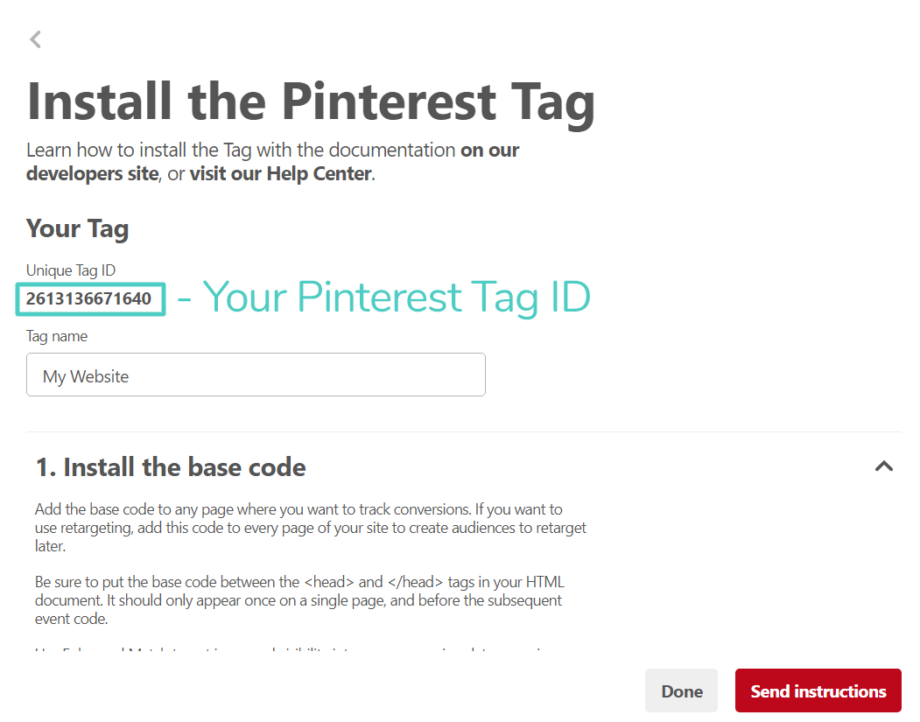
Before starting a Pinterest ad campaign, make sure you have installed the PinterestTag. With the Promoted Tag you’ll be able to track the actions people take on your website after seeing your Pinterest ads, including checkouts, sign ups, and searches.

Step 3: Choose your campaign goal

Each campaign starts at ads.pinterest.com with an objective. Choosing the rightgoal is important because it will determine what ad formats are available and how you bid in the ad auction.


There are four campaign objectives available:

  • Get traffic to your website. Earn high-quality leads and send Pinners to your website. You pay-per each click.
  • Build brand awareness. Gain broad exposure with current and prospective customers. You get charged per 1,000 impressions.
  • Increase installs for your app. There are two ways to promote app downloads on Pinterest. When you pay by install, Pinterest regularly adjusts your bid based on your budget. When you pay by the click, your ad is optimized for click traffic.
  • Build awareness through video views. Autoplay videos are ideal for promoting awareness and consideration. You pay per 1,000 impressions.

Step 4: Choose your campaign budget

Add your campaign name and then set your daily and lifetime spend limit. More specific pricing parameters will come later.

If you’re creating a carousel ad campaign, make sure you enable the option. This will only work if you’ve selected brand awareness as your campaign objective.


Step 5: Create an ad group

Choose a pre-existing ad group or create a new one. Think of an ad group as a container for your Promoted Pins. Each ad group can have a different assigned budget and different targeting.

Ad groups help you manage multiple goals within a single campaign. For example, perhaps you’d like to target specific content to a particular geography, but you have a limited budget for it.

Plan to launch with between two and four Pins per ad group.


Step 6: Choose your target audience

Set the parameters for the audience you would like to reach with your campaign.

You can target based on gender, location, language, and device. If your Pinterest ad campaign objectives are traffic or awareness, use a broad targeting strategy to avoid low click volume.


Read our guide on the top Pinterest demographics that matter to social media marketers.

Step 7: Select ad placement

If your budget permits, go with the all placements default. Otherwise there are two primary avenues for your ads to appear in: Browse and Search.

Browse placements end up in the home feed and related pins. They pair nicely with interest targeting, whereas search result placements perform better with keyword targeting.


Step 8: Add interests and keywords

You can expand on your targeting by adding interest and keyword targeting as well. This setting will ensure that your ads are automatically targeted to relevant searches and interests.

Pinterest finds that in in general, campaigns improve reach, click-through rates, and better achieve scale when interest and keyword targeting is enabled.


For the best results, use 25 keywords. Keywords can be formatted to indicate broad match, phrase match, or exact match. Negative keywords can also be added to exclude certain search terms from triggering ads.

Keyword formatting

  • Broad match: art modern
  • Phrase match: “art modern”
  • Exact match: [art modern]

Not sure what keywords to add? Learn how to find relevant keyword here.

Step 9: Set your budget and schedule

Enter the start and end date for your Pinterest ad campaign. Then set your daily or lifetime budget. Your daily budget sets your daily spending limit for your ad group. The lifetime budget is the total amount you want to spend between your start and end date.

Be careful what you add here, because this cannot be edited later on.


Here’s a video summary of steps 5-10:

Step 10: Tailor for optimization and delivery

Start by setting a maximum bid for your Pinterest ads. This is also known as your target CPM rate. Minimum bids must be above $2.00.

Step 11: Determine your pacing

There are two types of pacing options for your Pinterest ad campaign: Standard and accelerated. Standard pacing aligns your bids with your overall spend and campaign duration. Accelerated pacing may be better for high impact campaigns as it enables faster delivery of your budget and faster results.

Step 12: Pick your Promoted Pins

Click Pick a Pin to add Pins to your ad group. Remember, each ad group should aim to include two-four Pins. You can either create new Pins or pick Pins that you’ve added before. Assigned each Pin with a name and a URL.

For Pins to be eligible, they must:

  • Be saved to your profile
  • Not be saved to secret boards
  • Have destination URLs (they should not be shortened)
  • Not feature third-party videos or GIF

Pinterest will never spend over your daily or total budget caps, but accelerated pacing may drain your budget before your campaign end date.


Step 13: Monitor campaign performance

Click on Analytics from the Pinterest Ads Manager dashboard to measure the performance of your campaign. You’ll first be presented with an overview of all campaigns and their key metrics, including total clicks or impressions; engagement rate or CTR; average eCPM (earned and non-earned cost-per impression) and eCPC (effective cost-per click); and total spend. Click on a specific campaign to drill down into its performance details.

Each campaign is different, but a few ways you can further optimize your campaign are to broaden your audience, increase your budget, try different formats, or plan around events.


Read our detailed guide to Pinterest Analytics.

12Pinterest Ad Tips and Examples

Wednesday, October 14, 2020

PAID SOCIAL MEDIA MARKETING


What is paid social media?

Paid social media is a method of displaying advertisements or sponsored marketing messages on popular social media platforms, and targeting a specific sub-audience. Pay-per-click advertising, branded or influencer-generated content, and display ads are all examples of paid social media.

Every social media channel is different. Twitter offers short-form content, Instagram focuses heavily on visual-based content, Facebook has its own marketplace, and LinkedIn is the home of networking professionals.

As such, paid social media on each platform differs, and should, depending on the campaign and audience.

Here, we're going to explore some quick strategies that will help you decide how to use paid social to the benefit of your brand.

Paid Social Media Strategy

A paid social media strategy involves using the ad tools native to social media channels to create, schedule, and post targeted ads that will reach your intended market. Strategies might look a little different based on the channel and campaign.

Pringles and Rick and Morty might seem like an unlikely partnership, but it was a decision that came from months of planning and execution, with help in no small part from the social media channels chosen to run the commercial.

Having a paid social media strategy can save a budget that might not be as expansive as a global potato chip brand, so we've gathered the important things to know about using various social platforms for paid ads.

YOU WANT TO KNOW MORE ABOUT SOCIAL MEDIA ADVERTISING IN DETAILS YOU CAN FOLLOW THE EACH AND EVERY METHODS ONE BY ONE.

Powered by Blogger.