Translate

GET YOUR SITE ON LISTING

competitive research tools
Showing posts with label seo is. Show all posts

Sunday, January 10, 2021

SendinBlue VS GetResponse! Which One To Choose? (Full Guide)


SendinBlue VS GetResponse! Which One To Choose? (Full Guide)

More than 50% of the world population is using email. That is a total of 3.9 billion people, approximately. Thus, Email marketing is a strong and influential way to connect with your target market.

Digital marketers and entrepreneurs now have their tools for marketing. When it comes to Email marketing SendinBlueand GetResponse are two widely used email marketing tools.

Both of these tools have made our lives easier in terms of digital marketing. They are not limited to just email marketing. There are many other noticeable features of these tools. But which one is highly recommended? Just read on to find out.


The core differences between SendinBlue and GetResponse.

The way to being an extraordinary visitor blogger is to compose short (3 to 6 or so passages) posts that are fascinating, enlightening, comical, and pertinent to the subject of the blog (and your site). Obviously, they ought to have a connection to your site. Try not to exaggerate the connection. Try not to make it sound like an ad or something you just reordered from your site.

A couple of moments to make a couple out of thoroughly examined passages could do ponders for your web traffic. Continue searching for visitors contributing to a blog opening and never utilize a similar post for more than one blog. One post could bring a long period of traffic.

This likely could be your best method of creating quality web traffic and improving your SEO for your website(s).


SendinBlue

GetResponse

Free Access

Unlimited Plan (300 Emails/Day with Unlimited Contacts)

30 Days Free Trial

Email

Marketing 

SMS

Marketing 

Website Chat

Autoresponders         

Email Templates

Sales Funnel

Webinars

Facebook Ads

CRM

SMTP Service

Pay per emails

Cold Mailing

An Outline of SendinBlue and GetResponse

SendinBlue came to the scene in 2012 when all of the other such email marketing tools were already doing well, and we were familiar with all of them, including GetResponse. So in such a case, when SendinBlue came out of the blue, it was a most probable prediction that it would stand no chance.

But on the contrary, SendinBlue stood its ground and made its mark among the top email marketing tools within a few years. The thing that led to its success was its amazing services with a lesser budget. This is what the competitors were not able to provide.

Now SendinBlue is considered the cheapest and most wide-ranging email automation and marketing. Not only just email marketing, but it also provides SMS marketing, online sessions, advertising through social media, and CRM.

Almost 80,000 users across 160 countries have used it to this date, and it has been gaining more and more positive reviews and acknowledgments from the users.

Friday, January 8, 2021

Broken Links Are Bad News For Webmasters


A website admin or site proprietor's job or duties don't end when the site he works on goes "live" and is currently open by guests on the web. There is an entirely different arrangement of obligations and capacities that a site proprietor needs to accept to ensure that his site ceaselessly works impeccably and can satisfy its proposed capacities. A portion of the duties he needs to expect to incorporate giving new substance however much as could be expected, presenting the site to web crawlers, and effectively searching for complementary connections to bring the positioning up in web indexes.


Quite possibly the most essential obligation of a site proprietor is to check for broken connections to his site. Broken connections can be considered as one of the most noticeably terrible things that can happen to a site. A great deal of not all that great discernments and negative impacts emerge from having a site that is loaded with broken connections.

Truth be told, broken connections are tormenting such countless sites that it is being considered a significant issue on the web. Numerous reasons can be referred to for the spread of broken hyperlinks, the overall reasons for broken connections include Websites not being kept up with the fitting level of devotion, the engineering of the site, and how data is set inside the webpage continually changes, and the enormous occurrence of sites that are shutting down. 

traffic analysis tools

Hyperlinks are a significant segment of sites since it helps in the route around the site pages and focuses on bearings outside of the site. A site without joins resembles a huge load of reports that are heaped one on top of the other with no purpose and no wise route for you to get to the data that you need.
Connection the board is a significant and significant piece of keeping a site. As recently referenced, broken connections carry with them extremely negative insights about the site and these can have inconvenient impacts on the traffic produced by the site.


From a specialized viewpoint, broken connections can bring internet searcher robots to an abrupt halt, successfully keeping it from totally delineating a site for accommodation to web indexes. Furthermore, a site that is loaded with various broken hyperlinks gives guests that the webpage is amateurish and that the site proprietor or proprietors have a questionable standing – exorbitant picture issues that are difficult to change whenever it is set up. Also, guests who experience numerous challenges in a ththee will undoubtedly not return for a return visit, this is practically equivalent to losing imminent customers. They will be killed because they won't get the page that they are searching for, imagining that it isn't generally on the site when in actuality the page is there just that a mistake in coding made the page difficult to reach.


With web clients getting increasingly more refined as time passes by, it will require site proprietors more exertion to tempt these clients to visit their sites and broken hyperlinks won't help this troublesome cycle in any capacity.
Site proprietors and website admins should be mindful of the terrible impacts of having broken connections in their sites. They ought to perseveringly get rid of and fix any wrecked connections. Luckily, there are currently a developing number of convenient utilities that can help website admins found broken connections. With these utilities, dealing with a site turns out to be generally simpler.


For instance, xml-sitemaps.com has modified an independent content that won't just make sitemaps yet besides searches for broken connections in a site and afterward advises website admins or site proprietors what joins they are and to which pages the connections are related with. This computerization of the errand of checking broken connections is an extraordinarily efficient device for website admins and site proprietors.

Pricing: Save 18% with an annual plan

Tuesday, November 24, 2020

SEO OR PPC WHICH ONE IS THE BEST?


SEO vs PPC

There are two key differences when considering SEO or PPC. The first is that paid ads appear at the top of the page, above the organic listings influenced by SEO. The second is that traffic from organic via SEO is free, whereas traffic from PPC has a cost for each click. In many cases, SEO and PPC work best when integrated and strategically aligned.


ADVANTAGE OF SEO

SEO: Improve your organic traffic

What are the pros and cons of organic traffic from search engines? Let’s begin with the pros:

Awareness. Visibility in search engines for your targeted keywords puts your business in front of potential customers in much the same way as if you were to advertise, and it drives brand awareness.

Branding. Visibility around commercial search terms and informational queries related to your business area can have a positive branding benefit. Your brand can become associated with and trusted by searchers who are asking questions as they conduct the research that will lead to a purchase. You can become an authoritative voice around a given topic.

Credibility and trust. Having your site return in the organic results can influence your perceived credibility with an audience looking for your services. Many users skip ads and trust organic results more highly. Being visible gives your business that all-important stamp of approval. Also having strong review and reputation signals in place will deliver further benefit.

Website traffic. Increasing website traffic provides you with more opportunities to drive awareness of your business and educate a prospect as to why they would buy from you.

Cost per click. Traffic from organic search is free… sort of. Developing that visibility will take time and effort (money), but there is not a direct charge for each impression or click.

Return on investment (ROI). Organic search engine traffic can provide an improved ROI over traditional forms of paid media and certainly improve upon PPC.

Cost. While SEO is neither cheap nor easy, it will generally be more cost-effective than all other marketing tactics for delivering brand awareness and relevant traffic to your website.

Sustainability. Unlike paid search marketing, organic traffic does not dry up the moment you stop paying. As such, efforts to develop organic traffic can sustain a business when marketing spend is cut back.

Improved click-through rate (CTR). A higher percentage of users click on the organic results. While there are exceptions to this rule, you will generate more clicks from a highly placed organic listing than from a highly placed paid ad.

More clicks overall. To maximize visibility and clicks, you will want to have listings in the paid and organic results. Keyword-level experimentation is needed here to see if you are paying for clicks you would get for free or increasing overall clicks and CTR in both paid and organic — but to truly maximize results, strong visibility in paid and organic is needed.

Scope. There are so many new queries every day that to maximize scope, you will need strong organic visibility. You will not want to pay for all kinds of clicks either or advertise every piece of content on your website.

Strategic advantage. Visibility in organic search is not quick or easy — which is a good and a bad thing. Once you have established yourself in the organic results, your competitors can’t simply buy their way in (assuming you have done things the right way). This can provide a strategic advantage over the competition if they are relying on paid search.

It is not all sunshine and rainbows, though, and there are certainly cons to SEO. In many cases, organic traffic can be slow to come by, and you may be wildly outgunned. If you are just starting out, and the keywords you are targeting show results dominated by titans like Amazon and eBay, then you may need to rethink your strategy.

You may also need to develop content assets to achieve strong organic visibility. Not all businesses have the in-house resources to tackle content development, and this can pose a problem. Tactics such as safe, sustainable link building can be difficult to master, and often, a strategy is needed, along with expert support.

Organic traffic may also largely come in via informational or pre-purchase research queries. This is valuable traffic, but a more staged approach may be required to nurture those users to a purchase. This is a cornerstone activity in digital marketing; however, it is not always easy, and it is not a good fit for all businesses.

ADVANTAGES OF PPC

PPC: Laser-targeted visibility

How does paid search differ from organic search? With click-through rates and trust heavily stacked in favor of organic search, why would a business look at paid search? Here are some of the benefits PPC offers:

Position on the page. Paid search dominates above-the-fold content. With typically four ads on desktop and three on mobile, a user will always see the paid search ads, even if they choose to scroll past them.

Improved ads. PPC ads are just that: advertisements. As such, you have far more granular control and more space for delivering your marketing messages. Calls, locations, sitelinks, pricing and bullet points (callouts) are just some of the options for creating ads that dominate the page.


Visual product ads. Where you sell a product, Google provides the option of visual shopping ads (Product Listing Ads, or PLAs) that can help a user see what they will be clicking on. This kind of ad can really improve the click-through rate by offering a feature not available in organic search.


Brand visibility. Running paid search advertisements gets you seen by the right people. Even if they back off and conduct a brand search before clicking to your site, that visibility will pay dividends to your marketing.

Budget. PPC allows for a tight control of budget. Determine how much you are willing to spend per day (ideally with some initial and ideal ideas of returns), and set that fixed limit.

Targeting. PPC provides a laser-targeted way to get in front of potential customers. Ads can be targeted by search keywords, time of day, day of the week, geography, language, device and audiences based on previous visits. Organic traffic, by comparison, is far more scattershot.

Speed. While developing good organic visibility can take time, a PPC campaign can be created in days and ramped up in weeks. There is no faster way to get in front of customers at the very moment they are primed to buy than paid search engine advertising.

Agile. Speed provides agility. Want to test a new product? A new marketing message? You can get rapid feedback on a new product launch (or minimum viable product) by running a short PPC ad campaign.

Marketing intelligence. Where organic largely hides keyword data in the name of privacy, there is no such restriction with paid search. With conversion tracking and a solid integration with analytics software (like Google Analytics), we can determine what keywords convert and at what percentage and cost. This intelligence can be fed directly into organic search (SEO) marketing and can inform all other advertising to improve results across the board.

A/B testing. Easily split-test ads, landing pages, and even call-to-action buttons to determine where the very best results lie. Again, this information can be fed back into all other digital (and traditional) marketing endeavors.

Stability. AdWords does not suffer the same turbulence that the organic results can suffer from. There are changes, but they tend to have a far lower impact and are more easily managed. Careful use of match types and analysis of the search term reports allow for the removal of junk search and an increase in ROI over time.

Cost. Despite what many advertisers believe, a PPC account that’s well set up and managed can be a low-cost way to generate leads for your business. If you are a local business targeting a small geographic area and a small set of keywords, you may find that you can generate more than enough leads without breaking the bank. Additionally, over time, accounts can be further optimized to drive down costs and increase return.

As with organic search, there are many benefits to paid search advertising or PPC. However, there are also some pitfalls for advertisers to be wary of.

PPC can be expensive. It is not always the case, but costs can quickly add up. If you are targeting entire countries or running international campaigns, those costs can spiral.

Paid search advertising is, as the name suggests, paid — so it requires constant investment. Stop paying the piper, and your ads go away and your lead generation dries up. So long as you have a solid acquisition cost, then this should not be a problem, but in contrast to SEO, it can feel like a bad deal. Of course, SEO should be ongoing to keep the opposition at bay, but organic traffic can be a little more robust.

There are various options for search advertising with PPC, and making smart choices here will influence results. If you see product listings dominating the screen for your keywords, then text ads may not perform so well. Likewise, if you run product ads, and only text ads are returned, then these ads may not deliver the goods.

It is not unusual to get into bidding wars with other advertisers, which can drive costs up. As you start to run your ads, often you are taking a bite out of some other advertisers’ digital apple. Doing so can result in some spiraling costs.

Strategically, PPC is relatively easy to copy. If a competitor notices you are running ads, they can run ads. Your messaging can be imitated. Your entire funnel can be easily evaluated by competitors. This is the digital marketing landscape, and you have to accept that to some extent.

Successful PPC needs skilled management and optimization — from monitoring bids, Quality Scores, positions and click-through rates. Some of this can be done with scripts, but if you are too busy to do this properly, ensure you have an expert on hand to take care of keeping your account in tip-top shape.


Tuesday, October 6, 2020

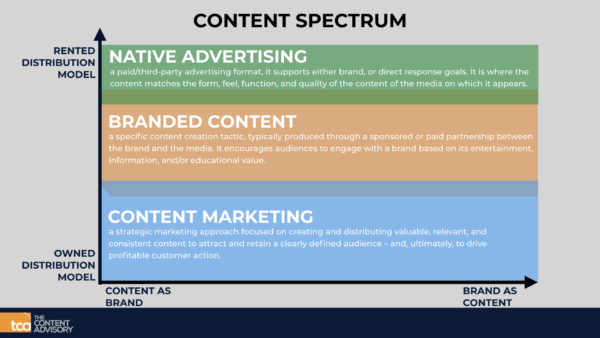
Definition of Native Advertising


Time To Define Native Advertising

Talk to any agency, brand or publisher about what they’re paying attention to, and within five minutes, you’ll hear one (or all) of these terms: “native advertising,” “sponsored content,” “branded content,” “content marketing,” and “custom content.”

The problem is that those terms mean something different to everyone. The media tends to use the terms interchangeably. (Even the New York Times gets tripped up in defining these tactics.) Here’s an attempt to clarify what’s what. Please add your thoughts in the comments.

Native Advertising:

When an ad unit can only be bought and displayed on one platform. Think Facebook’s Sponsored Stories; Twitter’s Promoted Tweets; Tumblr’s Radar. These ad units are unique to those environments.


Sponsored Content:

When a brand pays a publisher to have its name and/or message associated with a particular story. This typically takes the form of a brief intro paragraph informing readers that the following article is sponsored by an advertiser. You’ll see phrases like “brought to you by,” “presented by,” or “sponsored by.” This is not content produced by the brand. The marketer is given a broad topic area that it can choose to associate its brand with. The marketer does not get a say in what will be produced, at least not in the type of sponsored content programs run by sites like Mashable, Business Insider and Digiday.

Brand Content

We have heard ad nauseam that brands are publishers now. What they produce, on their own and running through their own distribution channels, is brand content. Think of Coca-Cola’s YouTube channel. The video below is content created by the soft drink brand that blurs the lines between advertising and entertainment.


Content Marketing:

This is the catchall phrase that encompasses all of the above. On a most basic level, it means “not banner ads.” It conveys the strategic shift occurring at many brands that are thinking of ways to sell their wares and services beyond the hard sell. These efforts involve creating content and experiences people want to consume, while at the same time conveying a brand message. For a brand like Coca Cola, that means hair-raising stunts and action-sports content; for American Express, it is producing tools and content useful and needed by small-business owners.

Wish you liked the content You can subscribe use for more useful contents about digital marketing. You can also get the latest guide of Digital marketing get the copy as fast as you can. get it now

Monday, October 5, 2020

How to Browse and Search your Liked Tweets

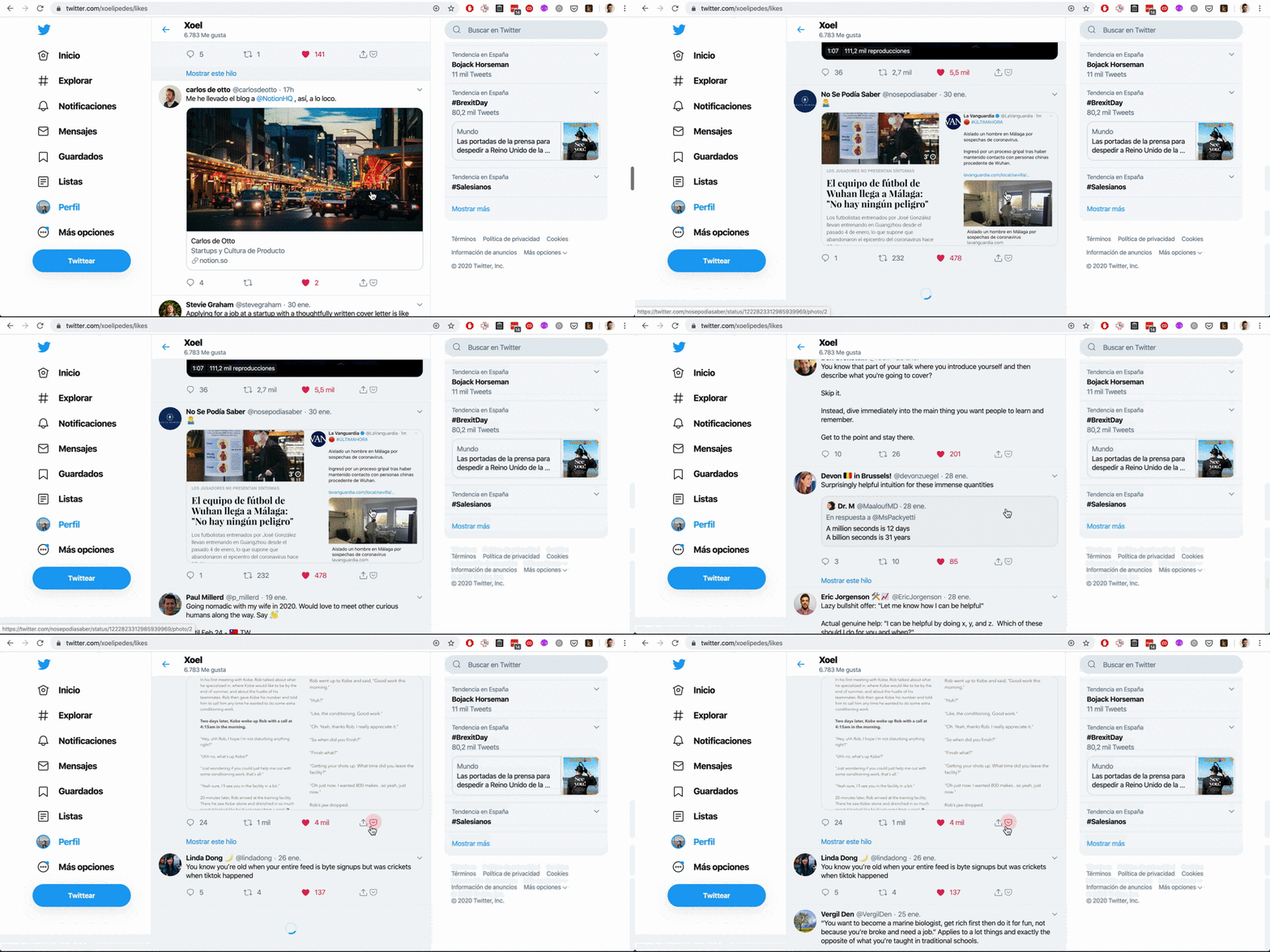
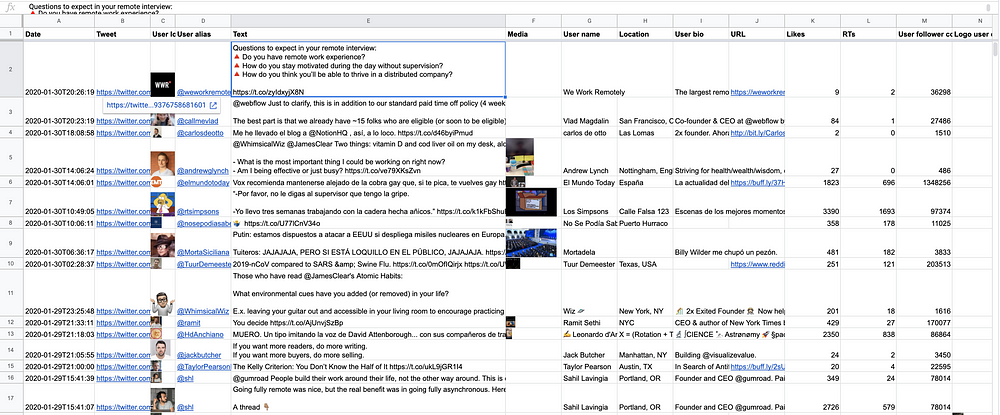
Have you ever tried to find a tweet you liked some time ago? Me too, and it’s almost impossible. Scrolling down in the ‘Likes’ tab of my profile while doing CMD-F is a pain and it doesn’t even work sometimes.

I came up with a way of saving all my past and future Twitter likes. It lets me browse, filter them and search for tweets by text or user. And it’s free.

I thought it could be helpful for others, so here it goes

Saving all your past Twitter likes

If you’re only interested in keeping an archive of your future Twitter likes, you can skip this part and jump to the last section.

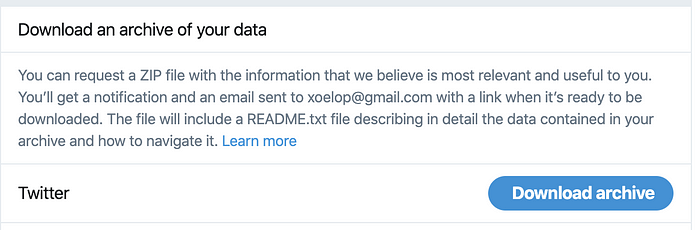
Step 1: Downloading your Twitter archive

Go to https://twitter.com/settings/your_twitter_data, enter your password and then click on ‘Download Archive’. It will take some minutes and you’ll get then an email when they’re ready.

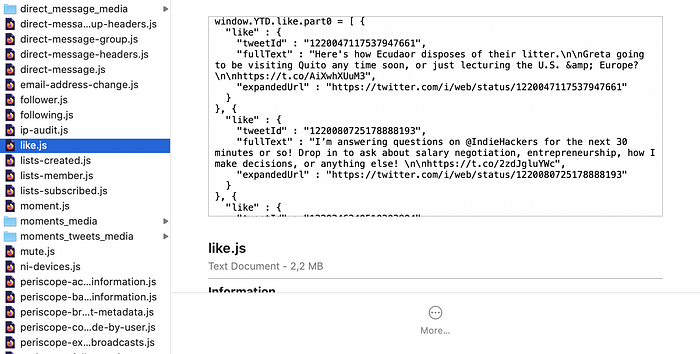
Download them and you’ll get a .zip with a bunch of .js files. The only one you’ll need is like.js


Step 2: parsing that file and getting the full info for each tweet

To do so, I made a small python project. You can clone it from https://github.com/xoelop/get-twitter-likes.

Then, go to where you’ve cloned the repo in your computer and copy your like.js file into the data folder.

The main script in the project is get_likes_to_csv.py . Running it parses like.js, connects to the Twitter API to download the full info for each tweet and then saves it to a CSV file.

To be able to use it, you’ll need to

  1. Register a new Twitter app here to get the access tokens necessary to interact with the Twitter API
  2. Create a file called .env in the root folder, whereget_likes_to_csv.py is, and fill it with your Twitter credentials
  3. Install pipenv if you don’t have it, doing pip install pipenv
  4. And finally, run pipenv run python get_likes_to_csv.py


I had about 6k liked tweets and it took about 1 minute. Then, you’ll have a CSV file with all the details for all your liked tweets in data

Finally: having all your liked tweets saved in the cloud

You could use Airtable (ref link) or any other service you want. I loove Airtable, it lets you create multiple views for the same table, filter, group values in a much nicer way than Google Sheets.

But the row limit per base in the free plan is only 1200, while it’s 5 millions in Google Sheets. So I used Google Sheets, it’s good enough for now.

To do it, go to sheets.new to create a new spreadsheet on Google Sheets. Then, click on File > Import > Upload and drag there the CSV you’ve just created


Saving all your new Twitter likes

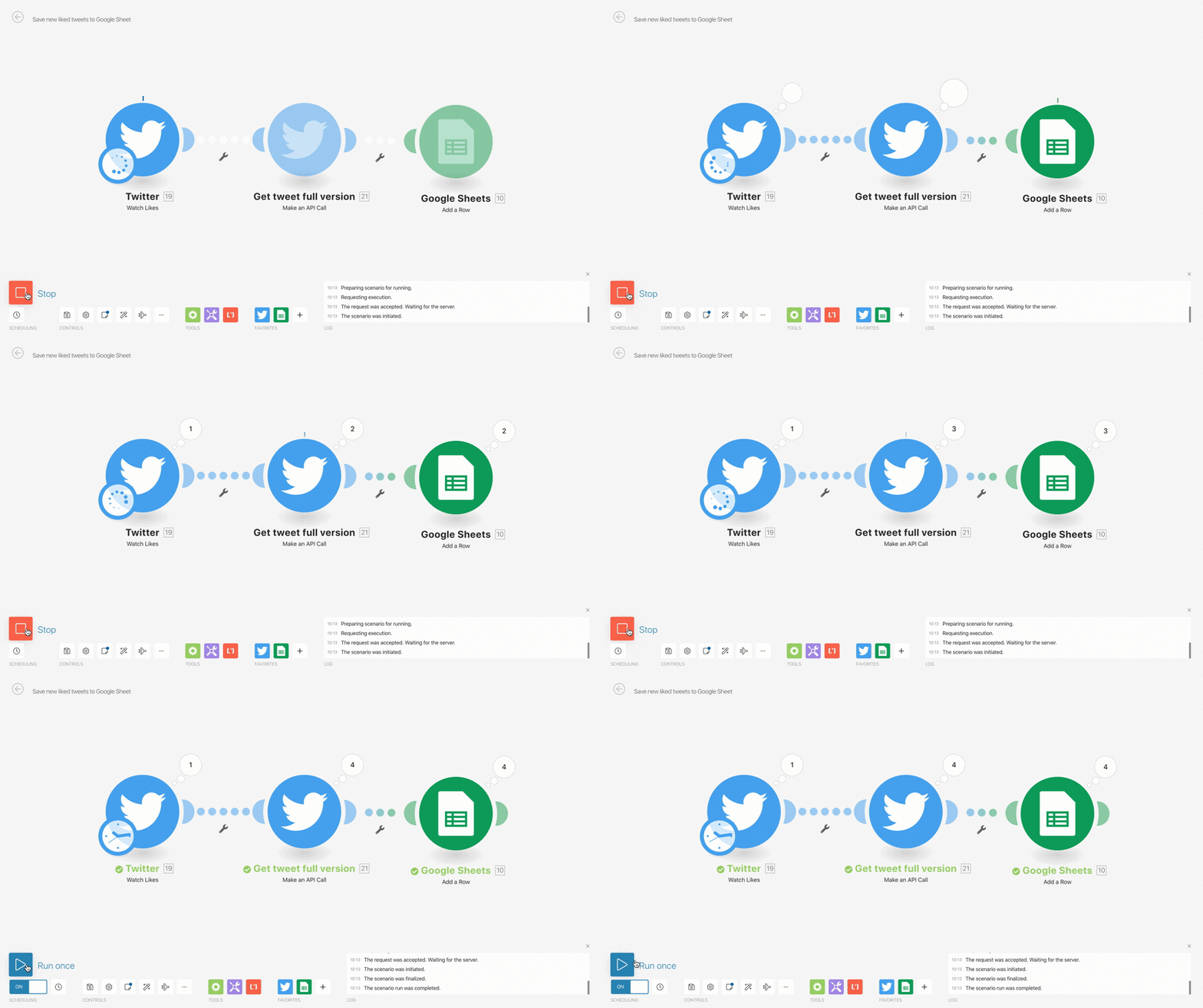
To do this, I created an Integromat scenario that fetches my most recent likes and adds them to this spreadsheet.


For those that don’t know it, Integromat is a product that lets you connect hundreds of apps together without coding. It’s like Zapier on steroids. Their free tier includes 1000 free operations per month, which is a lot and probably enough to run this. Read more

Sunday, October 4, 2020

Link Building


 What is Link Building?

Link building, simply put, is the process of getting other websites to link back to your website. All marketers and business owners should be interested in building links to drive referral traffic and increase their site's authority.

{Image}

Why build links?

Google's algorithms are complex and always evolving, but backlinks remain an important factor in how every search engine determines which sites rank for which keywords. Building links is one of the many tactics used in search engine optimization (SEO) because links are a signal to Google that your site is a quality resource worthy of citation. Therefore, sites with more backlinks tend to earn higher rankings.

There's a right way and a wrong way, however, to build links to your site. If you care about the long-term viability of your site and business, you should only engage in natural linkbuilding, meaning, the process of earning links rather than buying them or otherwise achieving them through manipulative tactics (sometimes known as black-hat SEO, a practice that can get your site essentially banned from the search results).

That said, natural, organic link building is a difficult, time-consuming process. Not all links are created equal: A link from an authoratative website like the Wall Street Journal will have a greater impact on your rankings on the SERP than a link from a small or newly built website, but high-quality links are harder to come by.

This guide will teach you how to build quality links that improve your organic rankings without violating Google guidelines.

Remember, link building is imperative in achieving high organic search rankings.

Get leads. Get sales. Get growing.    


Why Link Building Is Important for SEO

Link building is important because it is a major factor in how Google ranks web pages. Google notes that:

"In general, webmasters can improve the rank of their sites by increasing the number of high-quality sites that link to their pages."

Imagine that we own a site promoting wind turbine equipment that we sell. We're competing with another wind turbine equipment manufacturer. One of the ranking factors Google will look at in determining how to rank our respective pages is link popularity.

WordPress Themes with a bang

Get more leads from you website with Visual Visitor


While the above example provides a general visual understanding of why link building is important, it's very basic. It omits key factors such as:

  •  The trust and authority of the linking pages.
  • The SEO and content optimization of the respective sites.
  • The anchor text of the incoming links.

For a more in-depth explanation of how PageRank is calculated, read through these resources:

  •  The original Google PageRank paper
  • An in-depth discussion of the formula behind PageRank
  • The Wikipedia page on the subject

The most important concept to understand is that, as Google says, you're more likely to have your content rank higher for keywords you're targeting if you can get external websites to link to your pages.


Simple Link Building Strategies: How To Get Other Sites to Link to You

There are a number of link building strategies used to get external websites to link to yours:

  • Content Creation & Promotion - Create compelling, unique, high-quality content that people will naturally want to reference and link to, and tell people about it. You have to spread the word before you can expect anyone to find your content and link to it!
  • Reviews & Mentions - Put your product, service, or site in front of influencers in your industry, such as popular bloggers or people with a large social media following.
  • Links from Friends & Partners - Ask people you know and people you work with to link to your site. Remember that relevance matters; links from sites that are in the same general industry or niche as your site will have more value than links from random, unrelated sites.

It can take a while to build a lot of links, but be patient, and remember that shortcuts like buying links are against Google's guidelines and can be devastating for your SEO. Don't take chances.


Build Links for Free with Internal Link Building

There's an easy, underrated way to build links to the pages you're attempting to improve search engine rankings for. And it's a method you have total control over: Internal link building.

In attempting to get a Web page to rank, there are a few key factors to consider:

  • Anchor Text - One of the most important things search engines take into account in ranking a the page is the actual text a linking page uses to talk about your content. So if someone links to our Good Guys Wind Turbine Parts site with the text "wind turbine parts", that will help us to rank highly for that keyword phrase, whereas if they had simply used text like "Good Guys LLC" to link to our site, we wouldn't enjoy the same ranking advantage for the phrase "wind turbine parts".
  • Quality of the Linking Page - Another factor taken into account is the quality of the page that is sending the link; search engines allow links from high-quality, trusted pages to count more in boosting rankings than questionable pages and sites.
  • Page the Link is Aimed At - Many times, when people talk about your site they'll link to the home page. This makes it difficult for individual pages to achieve high rankings (because it's so difficult for them to generate their own link equity).

These are all elements we can't control in attempting to get other sites to link to us. We can, however, control all of these elements in linking to our own pages from our own content. We can:

Determine what anchor text to use.

Decide which page to point that anchor text at.

Ensure that the quality and content of the linking page is high (since it's our page!).

Building external links to your site is important, but in focusing more of your efforts on the optimization of these internal links, you can build quality in-bound links with rich anchor text to the proper pages, which will provide you with an unparalleled ranking boost (for free!).

Powered by Blogger.